Archive

Posts Tagged ‘social responsibility’

Why Our Political Culture Looks Insane

December 17th, 2011
Comments Off

The ugly spectacle of political gridlock reflects a political culture best described as insane. It’s increasingly disconnected from realities of our current world. We’re living in the midst of massive, worldwide transformation towards a highly intertwined and increasingly transparent world. The impact of this transformation is visible in economic shifts, new political movements, changing social norms and personal values, business practices and in individual behavior.

The products of this transformation call for policies and actions that respond to them in pragmatic, positive ways. But here in the U.S., our political culture of both left and right operates as though these new realities either don’t exist or don’t matter; as though the old order still prevails.

Examples of the political insanity include:

  • From the left, President Obama is attacked for not achieving and pushing for a more progressive agenda, despite a range of accomplishments that he’s achieved. But the greater insanity is that he’s operating with the new “requirement” instituted by Republicans: That every piece of legislation must now be able to overcome a filibuster threat, rather than be hammered out through compromise and then subjected to a majority vote.
  •  On the right, the Republican/Tea Party vilifies Obama’s “socialist,” “anti-American” or — in Newt Gingrich’s description — “Kenyan, anti-colonialist” agenda, despite an ironic reality to the contrary: President Obama’s policies and behavior are much closer to those of a moderate Republican of yore; the kind that doesn’t exist anymore.
  • Then there’s the ongoing clown show — Republican presidential hopefuls who argue for returning to policies that — as data show — have created the economic mess we’re now in. Moreover, they try to outdo each other to embrace anti-science, anti-knowledge positions, whether about climate change or evolution; and they vocally embrace anti-human rights positions when those rights concern gays and lesbians.

Contrast the above positions and policy objectives with some of the transformations whose impact is increasingly visible in everyone’s lives. On the surface, they appear disparate; unrelated. But collectively, you can see a theme: A rising change of mentality. That is, a mixture of values, world outlook, emotional attitudes, and conduct. It’s simultaneously a response to and a driver of the rise of interconnection and interdependency. And it has cascading political, economic and social implications.

Here are some of the seemingly unrelated shifts that reflect the reality of today’s world: Read more…

Share

Politics, Psychological health in a post-globalized world , , , , , , , ,

Why People Are Caught Between Public Lies And Private Truths

June 9th, 2011
Comments Off

The latest “sex and power” scandals flashing across the media in the last few weeks underscore just how commonplace, even repetitive, they’ve become. Some are new, like the sexual assault charges against former IMF President Dominique Strauss-Kahn, or Arnold Schwarzenegger’s revelation that he had fathered a child with a former member of the household staff. Some are recycling, like John Edwards’ indictment or Newt Gingrich’s presidential aspirations, which revive memories about his lying about an affair while impeaching President Clinton for lying about an affair.

The list goes on, the latest being the Anthony Weiner’s “rolling disclosure” episode. The Washington Post recently compiled may of the scandals into a nice summary – for those who are interested in keeping track.

But I think this steady stream of sex-related scandals is just the most titillating and graphic part of something more widespread and troublesome in the lives of many men and women today: the gap between people’s public lies and private truths.

That is, many people live with contradictions between their inner lives (the truths about their desires, emotional experience, self-image and ideals) and what they do with those truths behind the scenes, hidden from view (their private selves), and the lives they conduct publically, in their career paths, their relationships with their families or others they deal with and the positions they espouse or advocate (their public selves).

Public lies that contradict private truths have been part of our culture for some time. But in my work with people over the last few decades, I’ve seen it grow more rapidly since 9/11 and the economic/political events of the last few years. As I reflected on the reasons for this gap, how it damages people and our society, Read more…

Share

Midlife Conflict and Renewal, Politics, Psychological health in a post-globalized world, Work & Career "4.0" , , , , , , ,

The GoodMakers Street Team — A Mother Watches Young Activists Empower Global Change

May 19th, 2011

The following is a guest blog by Tilo Ponder, a Los Angeles based Writer/Producer of documentary films.  Tilo Ponder has spent her career as a catalyst for dynamic and integrated campaigns across all media, working with major entertainment and consumer brands in her 20+ years of working in the advertising agency world. Given the chance to parlay that experience into a more purposeful existence, she co-founded GoodMakers Films.  Tilo’s intense passion is a driving force behind GoodMakers Films, a non-profit organization which creates dynamic promotional documentaries that empower charities to get their message out to a global audience.  tilo@goodmakersfilms.org

When my 21-year-old daughter suddenly left NYU Tisch a year and a half ago and came home to Los Angeles, she didn’t really know what she was returning to do — only that she was deeply concerned about how rapidly the deteriorating economy was impacting the world around her. She reported that her college friends were feeling anxious and depressed, some of them dropping out of school as their parents, who had lost their jobs, were unable to keep up with tuition payments.  In our home, we were scrambling to keep everything going, but were committed to keeping our daughter in college, no matter what.  My husband is a freelance commercial director, I was at an ad agency heading up production and also running our own production company. Add to this, managing investment properties in other states, shuttling our 5-year-old son to pre-school and sports activities, while also supporting an 18-year-old daughter living in Scotland and a 2-hour daily work commute — our lives were jam-packed, but worked somehow. 

Our daughter’s announcement that she was taking a “semester break” created unrest and an ominous feeling that a small piece of our intricately maneuvered lives were being un-wedged in a dangerous way. I secretly wondered why she couldn’t just stay put.  Having tucked her away at a good college, I had assumed that she’d be set for 4-5 years, and that afterwards she’d be on her way to a prosperous career.  I challenged her assertions that her generation was apathetic and directionless, citing how it was her generation that only a year earlier ensured our nation’s first black president because of their passionate involvement in the final days of the campaign.  My daughter agreed on that point, but added that after so much build up to “change” and the subsequent downfall of a global economy, her generation had even less to believe in than before.

Given that, I wasn’t prepared for what followed. Read more…

Share

Psychological health in a post-globalized world, Work & Career "4.0" , , , , , , , ,

Why The Tea Party/Republicans Fear A Transforming America

April 12th, 2011
Comments Off

In the aftermath of the interim budget agreement, it’s clear that a new reactionary ideology has taken root in Tea Party/GOP policies. Psychological drivers are always present in political or personal ideologies and policies. I think it’s useful to expose and understand those within the positions of this new incarnation of the Republican Party, in order to order to counter them with constructive, positive alternatives.

In brief, the Tea Party/GOP is pushing for economic and social policies based on fears: Fears of massive transformation, turmoil and chaos underway in our society. And, fears about how those transformations will impact lives largely defined by self-interest, power and money. Some fear-generated policies are consciously created; others, unconscious. That is, some reflect a yearning for restoration of a way of life that no longer works in today’s changing society and globalized world. Other policy positions reflect conscious manipulation of those fears; But all driving the positions the Tea Party/GOP demands and is determined to enact.

I call their ideology and policies “reactionary” because they are a retreat away from creating positive, resilient responses to large-scale upheaval and change; and towards objectives that fail to address the sources of problems they aim to fix. Worse, their view of the impact their policies would have upon society doesn’t correspond to factual reality – as a broad range of commentators, both conservative and liberal, have pointed out.

For both reasons, one may describe the policies and ideology of the current Republicans as, psychologically speaking, delusional.

Understanding What The New Reactionaries Fear

We’re living through Read more…

Share

Politics, Psychological health in a post-globalized world , , , , , ,

Obama’s Call to “Win the Future” Requires a New Definition of “Success”

February 10th, 2011
Comments Off

When President Obama urged Americans to “win the future” in his recent SOTU address, he called upon the innovative, communal spirit that’s enabled us to “do great things.” Ironically, that part of his message exposes a glaring contradiction: How we’ve defined achieving “success” in our lives has become outmoded and maladaptive in our 21st Century world. To meet the challenges of our “Sputnik moment,” we need to revamp our thinking about what success is, as well as what psychological orientation is necessary to achieve it.

Consider this: The old, conventional view of a successful life is mostly defined by financial and self-interested criteria — getting, consuming and possessing for oneself. As Ronald Reagan once said about pursuing the “American dream” everyone “...wants to see an America in which people can get rich.”

But as President Obama pointed out in his address, “That world has changed. And for many, the change has been painful.” The reality of today’s interconnected, highly interdependent world, greed is not good. It’s psychologically unhealthy; it undermines the values, mindset and actions people need to strengthen in order to meet the challenges we face as individuals and as a nation.

That is, our security, success and well-being now require strengthening communal values and behavior; working towards common goals, the common good. Acting on self-interest alone, especially in the pursuit of personal power, steady career advancement and money Read more…

Share

Midlife Conflict and Renewal, Politics, Psychological health in a post-globalized world, Work & Career "4.0" , , , , , , , , ,

Psychological Health In Today’s World Needs A Redefinition

January 27th, 2011
Comments Off

This post continues what I wrote about in In my previous post – that we lack a clear, relevant description of what psychological health is, in today’s world; and, how you can build it.  Here, I describe more about what a psychologically health life looks like – what it’s criteria are — in your relationships, your work, and in your role as a “future ancestor.”

To begin with, I want to emphasize that psychological health isn’t the same as the absence of mental or emotional disorders. For example, you can’t say that a happy person is someone who’s not depressed. Many people have consulted me who aren’t depressed by clinical criteria, but they aren’t happy with their work, relationships or their overall lives, either.

Moreover, self-awareness isn’t equivalent to health. It’s a necessary underpinning, but it’s not enough. Therapists often help their patients deepen self-awareness about the roots of their conflicts, only to wonder why they remain the same. Psychiatrist Richard Friedman described that dilemma in a recent New York Times article in which he illustrated the puzzlement practitioners experience when they are confronted with the limitation of awareness, alone.

To the extent there’s a conventional view of psychologically health at all, it’s mostly equated with good life-management and coping skills. That is, managing stress in your work and personal life, and coping with — if not resolving — whatever emotional conflicts you brought with you into adulthood.

A less visible view of psychological health also exists: Successful adaptation to and embracing of the dominant values, behavior and attitudes of the society or milieu you’re a part of. The problem here is that such socially-conditioned norms have also embodied greed, self-absorption, domination, destructiveness, and divisiveness. They’ve been equated with “success” in adult life.

The upshot is that you can be well-adapted to dominant attitudes and behavior that are, themselves, psychologically unhealthy. So you may be “well-adjusted” to an unhealthy life.

We’ve been witnessing the fruits of that form of “health” throughout our society in recent years, in the form of Read more…

Share

Midlife Conflict and Renewal, Modern Love, Sex & Relationships, Psychological health in a post-globalized world , , , , , ,

The Rise of the New Global Elite

January 23rd, 2011
Comments Off

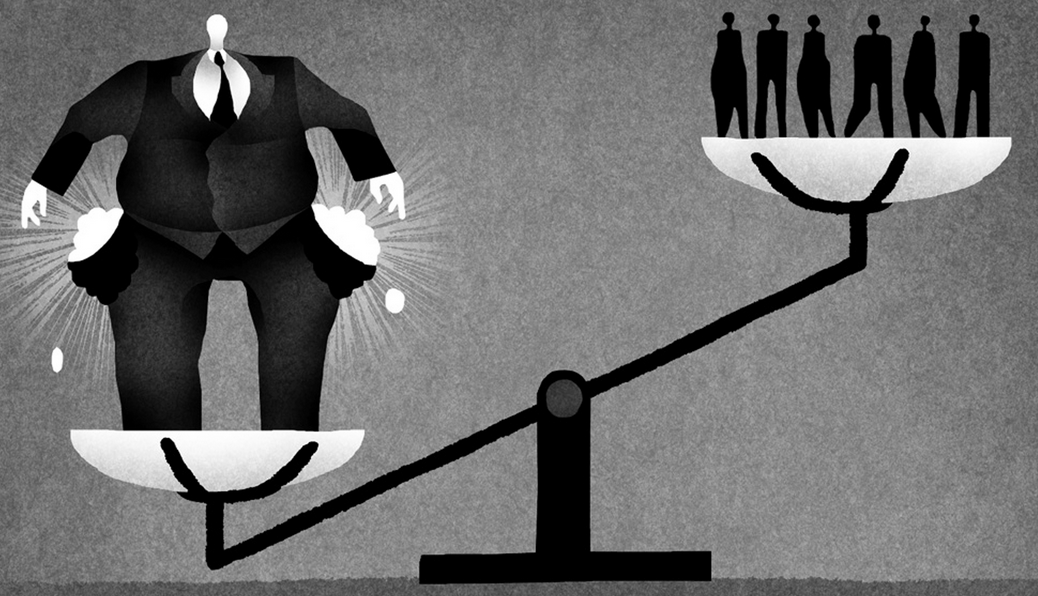
Chrystia Freeland has a very insightful, well-documented and researched analysis in The Atlantic about how the super-affluence of recent years has changed the meaning of wealth…and the implications for all of us.  I’m posting it here for Progressive Impact readers.

She writes:

F. Scott Fitzgerald was right when he declared the rich different from you and me. But today’s super-rich are also different from yesterday’s: more hardworking and meritocratic, but less connected to the nations that granted them opportunity—and the countrymen they are leaving ever further behind.

If you happened to be watching NBC on the first Sunday morning in August last summer, you would have seen something curious. There, on the set of Meet the Press, the host, David Gregory, was interviewing a guest who made a forceful case that the U.S. economy had become “very distorted.” In the wake of the recession, this guest explained, high-income individuals, large banks, and major corporations had experienced a “significant recovery”; the rest of the economy, by contrast—including small businesses and “a very significant amount of the labor force”—was stuck and still struggling. What we were seeing, he argued, was not a single economy at all, but rather “fundamentally two separate types of economy,” increasingly distinct and divergent.

This diagnosis, though alarming, was hardly unique: drawing attention to the divide….

Click here for the full article.

Share

Politics, Psychological health in a post-globalized world, Work & Career "4.0" , , , , ,

Gen X and Gen Y Workers Are Driving The New “4.0″ Career

December 13th, 2010
Comments Off

I often hear the following laments from younger and older careerists — about each other:

Younger workers: “These older people just don’t get it. They expect us to just fall into line, follow bureaucratic rules, and they don’t show us respect for what we know or what we can do.”

The older workers: “These young people just don’t understand how to function within an organization. They want recognition, promotion, everything before they’ve earned it, step-by-step, like we had to do. That’s not how reality is.”

They remind me of a couple who said about each other, “It’s not that we see things differently. It’s worse than that: We’re seeing different things!”

In a way, they are. Different career orientations are like lenses through which you view the world. In my recent post on the rise of the 4.0 career, I wrote that this shift is most visible among Generation X and Generation Y workers, but that it’s a broader movement as well, originating with baby boomers and the 60s generation who are now moving through midlife. But as the 4.0 career orientation grows, it’s also spawning the above differences in perception. In this post I describe the younger generation’s contribution to the 4.0 career transformation. It began before the economic meltdown and will continue to have an impact on organizations and personal lives in the years ahead, post-recovery.

To recap a bit, what I call the 4.0 career orientation includes but extends beyond the 3.0 career concerns that emerged in the last 20 years. The latter are about finding personally meaningful work and seeking a good work-life balance. In essence, the 3.0 careerist is focused on self-development. In contrast, the 4.0 orientation includes but also moves beyond those more personal concerns. It’s more focused on having an impact on something larger than oneself, contributing something socially useful that connects with the needs of the larger human community. The vehicle is opportunity for continuous new learning and creative innovation at work. The 4.0 orientation links with the movement towards creating successful businesses that also contribute to the solution of social problems. Read more…

Share

Climate Change & Green Business, Psychological health in a post-globalized world, Work & Career "4.0" , , , , , , , , ,

How Does Volunteerism Affect The Volunteer?

December 2nd, 2010
Comments Off

During our increasingly stretched-out holiday season, it’s easy to feel a bit cynical about people who suddenly want to do some volunteering. The staff of service organizations often wince at the prospect of receiving more offers of help than they actually need. “Where were you the rest of the year?” they mutter silently.

To be fair, many people are not just a once- or twice-a-year volunteer. In fact, volunteering one’s time, service and expertise is on the rise among all age groups. For many, it’s an integral part of their lives, an expression of their core values. That’s raised a question in my mind: Does volunteering time and service impact the life of the volunteer? And if so, how?

In recent years, I’ve researched this a bit through seminars we’ve held at the Center for Progressive Development for volunteers interested in exploring how their volunteering affects their personal and professional lives.

We’ve found that volunteer activity often reshapes or redirects people’s values, perspectives and even their life goals in several ways. It can spur new growth and awareness, both spiritually and emotionally. Sometimes the changes are slight, but clear — like the person who committed herself to ongoing work with a mission that she had initially chosen at random, in response to her company’s suggestion to employees that they consider volunteer service.

In other cases, the impact of volunteer work is more dramatic: changing the company one works for, or, as one man did, changing his Read more…

Share

Psychological health in a post-globalized world , , , , , , , , ,

The 4.0 Career Is Coming: Are You Ready?

November 18th, 2010
Comments Off
Originally published in The Huffington Post

Even in the midst of our economic disaster that’s hitting all but the wealthiest Americans, a transformation is continuing within people’s orientation to work. I call it the rise of the 4.0 career. 

This growing shift concerns how men and women think about and pursue their careers. It also defines the features of organizations that they want to work for and commit to. This shift that I describe below transcends its most visible form: Generation X’s and, especially, Generation Y’s attitudes and behavior in the workplace. Those are part of a broader shift whose origins are within men and women at the younger end of the baby boomer spectrum.

I first encountered this while interviewing yuppies (remember them?) in the 1980s for my book Modern Madness, about the emotional downside of career success. I often found that people would want to talk about a gnawing feeling of wanting something more “meaningful” from their work. They didn’t have quite the right language back then to express what that would look like other than feeling a gap between their personal values and the trade-offs they had to make to keep moving up in their careers and companies. The positive ideals of the 60s seemed to have trickled down into their yearnings, where they remained a kind of irritant.

Flashing forward 25 years, those people are now today’s midlife baby boomers. Their earlier irritation has bloomed into consciously expressed attitudes and behavior that have filtered down into the younger generations, where they’ve continued to evolve. Today, they’re reshaping how people think about and pursue their careers within today’s era of interconnection, constant networking and unpredictable change.

I’ll oversimplify for the sake of highlighting an evolution of people’s career orientations:

Career Versions 1.0, 2.0, 3.0… And The Emerging 4.0

The 1.0 career describes  Read more…

Share

Midlife Conflict and Renewal, Psychological health in a post-globalized world, Work & Career "4.0" , , , , , , , , , , ,

Is Serving The Common Good An “Un-American” Activity?

November 11th, 2010
Comments Off

One likely spin-off from the recent election will be a creeping redefinition of programs and policies that serve the common good as “un-American.” Some of the Tea Party’s most vocal members, including Rand Paul, Michele Bachmann, and others have already suggested having a “conversation” about privatizing or phasing out medicare, social security and even abolishing the Department of Education.

So I’d like to move the “conversation” along and state outright that, yes, promoting the common good is, indeed, un-American. And, that recognizing it as such is a good thing. Here’s why: The Republican/Tea Party’s stated vision for “taking America back” is a doctrine of extreme self-interest and greed. It both reflects and fuels what I described in a recent post as a “social psychosis” in personal and public life.

This “pro-American” vision is maladaptive to the realities of today’s world and our own changing society. Self-interest and the pursuit of individual power are twin agents for subversively undermining a healthy, thriving society. But that vision is likely to be with us for some time, with potentially devastating consequences.

However, there’s also a rising shift towards serving the larger common good throughout our society. I described the evidence for this in a subsequent post. And it is, indeed, un-American, with respect to the extreme Republican/Tea Party doctrine.

That is, serving the common good goes against grain of thinking that Read more…

Share

Climate Change & Green Business, Politics, Psychological health in a post-globalized world , , , , ,

Why Psychotherapists Fail To Help People In Today’s World

October 27th, 2010
Comments Off

Many people who enter psychotherapy today aren’t helped at all. Some end up more troubled than when they began treatment. And ironically, some therapists are examples of the kinds of problems they’re trying to treat. In this post I explain why that is and how to become a more informed consumer when considering psychotherapy.

The popularity of the TV show “In Treatment” is one indicator that there’s a large, market for psychotherapy, today. Despite the decline of the more orthodox psychoanalytic treatment – the kind that Daphne Merkin described in a recent New York Times article about her years in treatment – people continue to seek competent professional help for dealing with and resolving the enormous emotional challenges and conflicts that impact so many lives in current times. Beyond healing, they want to grow their capacity for healthy relationships and successful lives.

Many skilled and competent therapists are out there. (I use term “therapist” to describe psychologists, psychiatrists and clinical social workers – professionally trained and licensed practitioners.) Moreover, research shows that psychotherapy can be very effective. Either alone, or sometimes in combination with the judicious use of medication.

Yet so often practitioners don’t help people very much. Some struggle for years in therapy with one practitioner after another, and never seem to make any progress. Others resolve some conflicts, but then are hit with others that hadn’t been addressed.

I see three reasons for this situation. Read more…

Share

Midlife Conflict and Renewal, Modern Love, Sex & Relationships, Psychological health in a post-globalized world , , , , , ,

Fooling “All of the People….”

August 24th, 2010
Comments Off

It’s quite an achievement:  Today’s Republicans – members of the Party of Abraham Lincoln, after all — are steadily disproving one of Lincoln’s most quoted lines:  You can fool some of the people all of the time, and all of the people some of the time, but you can not fool all of the people all of the time.”

The current version of the GOP is doing a good job at trying to fool all of the people, all of the time.  And, with the help of many Democrats, who give new meaning to the term, “fellow travelers.”

Case in point: The issue of the soon-to-expire tax cuts for the rich.  The Bush tax cut legislation of 2001 included a provision that they would expire at the end of 2010, and tax rates would then revert to 2000 levels.  The Obama administration wants to keep the tax cuts in place for the middle class, who would benefit from them during this continued economic near-depression; but let them revert back to previous levels for those with very high incomes, when they expire at the end of this year.

But guess what?  The Republicans, together with a number of Democrats, are fighting vigorously to preserve the tax cuts for the wealthiest Americans.  Republicans and their Democratic allies argue that it’s more beneficial to the economy to preserve the tax cuts for the wealthy – those making over $2 million a year —  because that would help “small business.”

Tell me, how many small business owners make that kind of income? And how would we make up for the loss of revenue?  By taking away benefits for the middle and lower classes, in the form of food stamps and other benefits or services.

This is where trying to “fool all of the people all of the time” comes in:  The entire argument is disguised in Orwellian terms, as necessary and good way to benefit everyone.  Writing in the New York Times, Paul Krugman exposes this with a good analysis of the deception and corruption behind it all.

For example, he points out that continuing the tax cuts for the rich would cost the federal government $680 billion in revenue over the next 10 years.

And where would this $680 billion go? Nearly all of it would go to the richest 1 percent of Americans, people with incomes of more than $500,000 a year. But that’s the least of it:  …estimates are the majority of the tax cuts would go to the richest one-tenth of 1 percent.  (and) the average tax break for those lucky few — the poorest members of the group have annual incomes of more than $2 million, and the average member makes more than $7 million a year — would be $3 million over the course of the next decade.

Krugman is right on target when he points out that

…it’s hard to think of a less cost-effective way to help the economy than giving money to people who already have plenty, and aren’t likely to spend a windfall.  No, this has nothing to do with sound economic policy.

He also points out that this reflects our corrupt political culture,

… in which Congress won’t take action to revive the economy, pleads poverty when it comes to protecting the jobs of schoolteachers and firefighters, but declares cost no object when it comes to sparing the already wealthy even the slightest financial inconvenience.

So, what will prevail:  The corruption, deception increasingly rampant in our culture – disguised in Orwellian terms, as “helping” you, the average American?  Or Lincoln’s observation?

Stay tuned….

Share

Politics , , , , ,

Three Essential Pillars Of Health and Resiliency In Today’s World

July 15th, 2010
Comments Off

Upgrade To Career 4.0; Practice “Harnicissism;” and Become a Good Ancestor

In a previous post I wrote that a key pathway to psychological health and resiliency in today’s world is learning to “forget yourself.” This post describes ways to do that in three important realms of your life – your work, your personal relationships, and your life “footprint.”

In the earlier post I explained that “forgetting yourself” doesn’t mean neglecting your own legitimate needs or concerns. Rather, it means letting go of our human tendency to overly dwell on ourselves – our own concerns, needs, desires, slights, complaints about others, and so on. Psychological health and resiliency in today’s world grows when you can do that and put your energies in the service of something larger than yourself: problems, needs and challenges that lie beyond your own personal, narrow self-interest.

That may sound like a paradox, but it’s based on a new reality: Today’s world is changing more rapidly than you can imagine and is becoming immensely interdependent, interconnected, unpredictable and unstable. In this new environment you can’t create or sustain a positive, healthy life through the old ways of reactive resiliency, of coping and hoping to rebound.

That is, chronic unhappiness, dysfunction and overt emotional disturbance lie in store for those who remain too locked into thinking about themselves and who use old solutions to achieve success in relationships and at work. For example, trying to achieve power and domination over others, and thinking you can hold on to that. Fearing collaboration and avoiding mutuality with people who are different from yourself, or with whom you have differences. Looking for ways to cope with stress and restore equilibrium or “balance” in your life. And overall, being absorbed by your own conflicts, disappointments and the like. The latter are inevitable, and dwelling on them is a breeding ground for resentment, jealousy, and blame. That’s a dead-end. The consequences are visible in people who are unable to handle career downturn, who experience mounting relationship conflicts and who suffer from a range of psychological problems like depression, boredom, stress, anxiety and self-undermining behavior.

In contrast, positive resiliency in today’s environment is the byproduct when you aim towards common goals, purposes or missions larger than just your own narrow self-interests. That keeps you nimble, flexible, and adaptive to change and unpredictable events that are part of our new era. Then, you’re creating true balance, between your “outer” and “inner” life.

Here are three ways you can move through self-interest. Each describes a shift, or evolution from the older, reactive form of resilience to the new, proactive form:

Upgrade your career to the 4.0 version; Practice “Harnicissism;” and Become a Good Ancestor

Yeah, I know — those descriptions sound odd. Read more…

Share

Midlife Conflict and Renewal, Modern Love, Sex & Relationships, Psychological health in a post-globalized world, Work & Career "4.0" , , , , , , , , ,

Learning To “Forget Yourself”

April 26th, 2010
Comments Off

“Becoming Sane…”  Part IV

In Part III of “becoming sane….” I wrote that our prevailing model of psychological health needs revision for today’s world – for outward success in a changing world, and for internal well-being.  I concluded by saying that a key to emotional resiliency and, more broadly, psychological health, in current times is learning to “forget yourself.”

So what does that mean?  Not thinking about your own needs?  Not looking out for yourself?  Not quite.  I’m using the phrase “forget yourself” to highlight an important capacity for health, survival, and “happiness” in today’s tumultuous, interconnected environment: the capacity to focus more on problems, needs, and solutions beyond just your own.  That is, the person who is too absorbed in his or her own self, own conflicts, own disappointments, and the like is much less able to engage the larger dilemmas and issues in positive, solution-oriented ways.  And that deficiency circles back to create dysfunction, damaged relationships, and career downturns.

Along the way I’ll be writing more about specific ways you can learn to “forget yourself” in your work, your relationships and your role as a global citizen. Here are some guidelines that help lay the foundation.

Three Responsibilities:

Think about your responsibilities as a human being living in today’s world, and on this planet.  Specifically, consider the following three responsibilities. They can serve as helpful guidelines for moving through and beyond the tendency we all share — to focus too much on our own selves.

Responsibility for your own mind-body-spirit

Recognize that it’s your job, alone, to continue learning and developing your emotional, mental, creative and physical capacities. Enlarging these capacities helps provide the flexibility and adaptability you need to deal with changes, good or bad. Don’t become like the character John Marcher in Henry James’ “The Beast In The Jungle,” who waited passively, believing that something significant was going to happen…and ended up with a failed life.

Responsibility for those less able

Part of the new criteria for psychological health include this awareness:  You grow through your efforts to help and support others, less able than yourself, to find and follow a healthy path in this world. Find someone who needs and would welcome your aid, whether your children or family member. But stretch further, to include a stranger or those within the extended world community who suffer from lack of clean water, from famine, disease or torture. Organizations and individuals who could use your help are a click away on the Internet.

Responsibility for the planet

Reflect on the fact that your actions at home or in your community can help maintain a healthy, sustainable planet for future inhabitants, including your own descendants. Or, they can further jeopardize the environment they will live in. Look at your own actions in your home, your community, and at work. Ask yourself, are you becoming a “good ancestor?”

Some Steps You Can Take:

Loosen the grip of self-interest

Use self-awareness to observe – and contain – your Read more…

Share

Modern Love, Sex & Relationships, Psychological health in a post-globalized world, Work & Career "4.0" , , , , , , , , ,

Becoming Sane….Part II

April 13th, 2010
Comments Off

“What Happened To My Mental Health?”

In Part I of “Becoming Sane in a Turbulent, Interconnected, Unpredictable World,” I wrote about why you need a new kind of emotional resiliency for success and well-being in today’s world.  Here, I’ll extend those thoughts about resiliency to psychological health in general.  Just as we need to redefine resiliency, I think we need to reformulate what a psychologically healthy adult looks like in this transformed world.  Here are my ideas about that:

Throughout most of the last century, adult psychological health has been largely equated with good management and coping skills: Managing stress within your work and personal life; and effective coping with or resolution of whatever emotional conflicts you brought with you into adulthood – and we all bring along some.

So, in your work that might include being clear about your career goals, and working your way up a fairly predictable set of steps to achieve power, recognition and financial success – all the things that we’ve equated with adult maturity and mental health.

At home, it would mean forming a long-term relationship that withstands the power struggles and other differences that often lead to affairs or even divorce.  You would assume that the healthy adult doest that via compromise at best, or disguised manipulation at worst.  In addition, you would accept “normal” decline of intimate connection and vitality over time.

But the fallout from the worldwide upheaval over the last few years have turned all those criteria of health upside down.  To be clear, it’s important to be able to manage conflicts that could derail your career or personal life.  But doing that isn’t enough to ensure future success, sanity or well-being in this turbulent and highly interdependent world we now live in.

Massive, interconnected forces within this globalized, unpredictable world add a host of new emotional and behavioral challenges to living a psychologically healthy, well-functioning and fulfilling life.

I deal with the fallout almost daily: People who’ve functioned pretty well in the past, but now feel as if they’re standing on tectonic plates shifting beneath them. Despite their best efforts, they struggle with mounting anxiety about the future of their own and their children’s lives, and confusion about their values and life purpose.

There’s the former Wall Street financial executive who told me he’d always defined himself by “making it through the next end zone” in his career, working long hours to ensure financial success. Now, as his company – and career – crumbled, he found that in addition to sacrificing time with his family, he had sacrificed his health: He has diabetes and high blood pressure. “Kind of a reverse ‘deal-flow,’ ” he lamented to me.

And the management consultant, pressured to ratchet up her travel to keep her career on track. “I’d been coping with everything, I thought,” she told me, “though I don’t like needing Zoloft to do it.” Instead of her career becoming more predictable as she gained seniority, her career propelled her into an even wilder ride. “Now I don’t have enough time for my daughter or my husband,” she said. “What kind of life is this? . . . My husband’s checked out, emotionally. And what am I teaching my daughter?”

Or the lawyer, who’d prided himself on “eating what I kill, and I’m a good killer.” He told me he has “more money than I ever dreamed of,” but also says that, “secretly, I hate what I do for a living.” But what’s the alternative, he asks, without “looking like a dysfunctional failure if I opt out?” After a failed marriage, he entered therapy and had begun to realize how his father’s unfulfilled dreams of “success” have impacted his own life — when suddenly his father died. “I’m in a tailspin,” he says; depressed and confused about what his own purpose in life is.

All of these people were on the kinds of life paths they expected would bring them predictable rewards. But counting on that linear upward climb is now hazardous to your mental health.

In fact, following that old path can make you more vulnerable to Read more…

Share

Climate Change & Green Business, Midlife Conflict and Renewal, Modern Love, Sex & Relationships, Psychological health in a post-globalized world, Work & Career "4.0" , , , , , , , , , , ,

The Psychology Of Public Policy

April 9th, 2010
Comments Off

The other day Federal Reserve Chairman Ben Bernanke stirred up some interesting reactions.  He said in a speech that Americans are faced with having to accept higher taxes or readjustments in programs like Medicare and Social Security, in order to avoid ever-increasing budget deficits that will be catastrophic.

Now I’m not an economist (see former Undersecretary of Commerce Ev Ehrlich’s blog for such matters).  But I started thinking about Bernanke’s comments — and the reactions from some Republicans and assorted “anti-tax patriots” who came out with guns blazing (metaphorically….so far) — from a psychological perspective.  I find some psychological attitudes and ideology about the role of individuals in society driving the reactions to what Bernanke raised.  They’re visible as well in the angry, hostile response to the health care legislation and, more broadly, the fear and loathing of “government takeover.”

Here’s what Bernanke said:

“These choices are difficult, and it always seems easier to put them off — until the day they cannot be put off anymore. But unless we as a nation demonstrate a strong commitment to fiscal responsibility, in the longer run we will have neither financial stability nor healthy economic growth.”  And, “To avoid large and ultimately unsustainable budget deficits, the nation will ultimately have to choose among higher taxes, modifications to entitlement programs such as Social Security and Medicare, less spending on everything else from education to defense, or some combination of the above.”

In The Washington Post story reporting Bernanke’s speech, writers Neil Irwin and Lori Montgomery point out that:

“…the economic downturn — with tumbling tax revenue, aggressive stimulus spending and rising safety-net payments such as unemployment insurance — has driven already large budget deficits to their highest level relative to the economy since the end of World War II. This has fueled public concern over how long the United States can sustain its fiscal policies.

The upshot of what we’re facing appears to be this: Our current way of life is unsustainable.  So what’s a possible remedy, according to Bernanke and others?  Raising taxes, not lowering them.  Cuts in Medicare benefits.  Raising the retirement age.  And bringing rising health care costs down.  To  do any or all of that requires a different mentality about our responsibility and obligations to others in our society.  And it’s not pleasant.  That’s the psychology part.

That is, we’re highly attached to the ideology that we are and should be separate, isolated individuals; that each of us should look out for one’s own self-interest.  And we define that largely by material acquisition and money.  Hence, opposition to “redistribution” of wealth, even though that’s exactly what we do via taxes that support all the services that we expect society to give us.  We also define our self-interest as psychologically healthy, mature, even; the hallmark of a succesful life.  Those that don’t do as well are not my problem.

Except now they are:  We’ve been hit with the reality that our world is so interconnected that someone else’s “problem” is also our own.  To consider subordinating some of our personal wants and goals for the larger common good feels foreign and frightening.  Yet that’s exactly what we’re faced with doing. It begins with shifting our mental perspectives towards recognizing that we’re all in the same boat — not just we Americans, but all of us in this global community.  And it means stimulating the emotional counterpart of that perspective — the hard-wired capacity for empathy.  And then, making the sacrifices that result from embracing the new realities.  The economic collapse has made the need for those shifts very apparent.  We’re faced with learning to sacrifice in ways that we’re not used to doing, in order to thrive as individuals and a society in the world as it now exists.

But such shifts meet with strong, ingrained resistance and denial.  They’re fueled  by unrealistic, almost delusional notions that pursuing self-interest at all costs will lead to success and well-being. So, for example, Republicans pounced on the suggestion of increasing taxes.  They also went after remarks by Paul A. Volcker earlier this week, who spoke very directly in favor of higher taxes.  He said that the U.S. might have to consider a European-style sales tax, known as a value-added tax, to close the budget gap.  He said “If at the end of the day we need to raise taxes, we should raise taxes.”

That’s a pretty direct, unvarnished statement of reality.  But Republicans accused Obama of plotting a big tax hike, for nefarious purposes.  ”To make up for the largest levels of spending and deficits in modern history, the Administration is laying the foundation for a large, misguided new tax, a first-time American VAT.” Sen. Charles E. Grassley said in a statement.

Onward goes the struggle between facing reality and dealing with it, or not facing it….and still having to deal with it

Share

Climate Change & Green Business, Midlife Conflict and Renewal, Psychological health in a post-globalized world, Work & Career "4.0" , , , , , , , ,

Becoming Sane In A Turbulent, Interconnected, Unpredictable World — Part 1

April 6th, 2010
Comments Off

Why Emotional Resiliency Doesn’t Work In The 21st Century

It’s becoming clear that our understanding of emotional resilience – what it is and how to achieve it — (and, more broadly, psychological health)  doesn’t mesh very well with today’s realities. Conventional descriptions of resilience and pathways to mental health don’t enable you to handle the challenges and stresses we face in the 21st Century.

Let me explain. Resilience is generally defined as the ability to cope successfully with misfortune or traumatic events. Being able to bounce back from adversity and keep on going. What helps you do that includes, for example, reviewing your strengths, focusing on positive thoughts and feelings, learning stress management, looking down the road to what you can manage better. And, by getting psychotherapy and medication when you’re unable to bounce back very well on your own.

Prior to the 21st Century, that view of resiliency and how to build it was more relevant than today. The adversity and disruptions you were likely to experience were more stable, in a sense. The world was more predictable, more linear, with respect to the kinds of stresses and disruptions that would occur – as emotionally troubling as they might be.

Most of our thinking about emotional resilience and healthy functioning, then, fits a world in which unanticipated negative events are fairly predictable. They follow a fairly understandable course, following which you can reasonably anticipate a return to some form of previous stability. In that world, wars eventually ended. The economy went through recessions, then recovered. You might suffer a career or relationship setback but could assume that there was a path to recovery.

That notion of resilience and the ways to build it remain an important foundation for mental health. But they don’t help so much when you’re faced with the challenges of today’s environment. That’s because the very notion of resilience and the strategies for bouncing back are reactive. They focus on responding to something that happens to you, rather than on what you need to be doing proactively, as part of your way of life.

Starting with 9-11, and especially since the economic meltdown that began in the fall of 2008, we’ve been living in a world that’s rapidly transforming beneath our feet. Today’s world is an interconnected, interdependent, diverse, unpredictable and unstable global community. And that’s created new psychological challenges for everyone, challenges that require a highly proactive mentality.

Without it, you might feel like the woman who consulted me recently. Even before she sat down she said,  ”I don’t know whether to reach for the Prozac….or Prilosec!”

Her grim humor masked her “recession depression” and other emotional battering. She didn’t know what would help. I’ve witnessed that a great deal in the last few years: Career and financial worries or losses; the ripple effect of those upon family life; anxieties about what sort of future one’s children are headed into, especially with climate change and terrorist threats; and the increasingly polarized views about our government’s role in people’s lives. Research and clinical observation show that all of the above are taking a psychological toll on relationships, families, career expectations, and on people’s entire sense of what they’re living and working for — their life purpose.

Unfortunately, those of us in the mental health professions haven’t been much help with these issues. Most of us continue to look through the rear-view mirror at a model of resiliency and health defined by coping with and managing conflicts in relationships and the workplace; conflicts that you can bounce back from and reestablish some kind of stability…all while continuing to pursue self-interest, such as getting your needs met, your personal goals achieved, your “happiness” acquired.

But today’s world of ongoing disruptions, continuous uncertainties and insecurity has become the new normal. Seeking to bounce back to stability and focusing on self-interest, which we’ve learned to think is the pathway to success, health and well-being, isn’t the right ticket.

In short, there’s no state of equilibrium you can bounce back to. In this highly diverse, interdependent, interconnected world.  Trying to do so is a fast ticket to dysfunction and derailment. You can’t reestablish equilibrium within a constantly shifting world. But engaging these new realities in positive ways will support your success and well-being.

Research shows that you can proactively build specific emotions, thoughts and actions that are effective for adapting to life in the non-equilibrium world we now live within. That’s encouraging, because I think we’re evolving towards a new definition of psychological health via rethinking resilience.

The criteria of a new, proactive resiliency – maybe call it “prosilience – may sound contradictory because they include letting go of self-interest in your relationships and work. The new view of resilience emphasizes being flexible, open and nimble; being able to shift and redeploy your personal resources – emotional, creative, intellectual – towards positive engagement with others.

Resiliency grows from putting your energies, your values, emotional attitudes and actions in the service of the common good – something larger than just yourself. That’s what supports both success in your outside life and internal well-being. And in today’s rapidly transforming world, you need both.

In the future look for new posts about perspectives, research and actions that relate to “becoming sane in a turbulent, interconnected, turbulent world.”  Through them I hope to contribute to a revised and needed reformulation of what psychological health and resiliency are in today’s world — in all realms of life:  intimate relationships, career challenges, engagement with diverse people, and in our responsibilities as  global citizens.

Share

Midlife Conflict and Renewal, Modern Love, Sex & Relationships, Psychological health in a post-globalized world, Work & Career "4.0" , , , , , , ,

Welcome To The New “Real America”

April 2nd, 2010
Comments Off

In two recent New York Times columns, both Frank Rich and Charles M. Blow dug beneath the current surge of anger and right-wing extremism and came up with some penetrating insights about the sources of the outrage; insights that are also the tip of an iceberg:  Both of their analyses reflect a broad, sweeping evolution within the mentality of men and women that’s been taking place beneath our feet for the last several years.  I’ll describe some of those broader changes below, but first let’s look at what Rich and Blow describe.

Rich points out that the “tsunami of anger” today is illogical, in the sense that the health care legislation is less provocative than either the Civil Rights Act of 1964 or Medicare.  He also reminds us that the new anger and extremism predated the health care debate:

The first signs were the shrieks of “traitor” and “off with his head” at Palin rallies as Obama’s election became more likely in October 2008. Those passions have spiraled ever since — from Gov. Rick Perry’s kowtowing to secessionists at a Tea Party rally in Texas to the gratuitous brandishing of assault weapons at Obama health care rallies last summer to “You lie!” piercing the president’s address to Congress last fall like an ominous shot.

He’s pointing out that major changes are occurring in the demographics of our country.  These changes – and others, concerning what people look for in relationships and in their careers —  are beginning to have major impact on us psychologically, including our psychological health.  For some, they generate tremendous fear that can give rise to hatred and aggression; a desire to “take back our country.”

Rich points out that:

Demographics are avatars of a change bigger than any bill contemplated by Obama or Congress. The week before the health care vote, The Times reported that births to Asian, black and Hispanic women accounted for 48 percent of all births in America in the 12 months ending in July 2008. By 2012, the next presidential election year, non-Hispanic white births will be in the minority. The Tea Party movement is virtually all white. The Republicans haven’t had a single African-American in the Senate or the House since 2003 and have had only three in total since 1935. Their anxieties about a rapidly changing America are well-grounded.

Then, in a similar analysis, Charles M. Blow writes in his column:

It’s an extension of a now-familiar theme: some version of “take our country back.” The problem is that the country romanticized by the far right hasn’t existed for some time, and its ability to deny that fact grows more dim every day. President Obama and what he represents has jolted extremists into the present and forced them to confront the future. And it scares them.

Even the optics must be irritating. A woman (Nancy Pelosi) pushed the health care bill through the House. The bill’s most visible and vocal proponents included a gay man (Barney Frank) and a Jew (Anthony Weiner). And the black man in the White House signed the bill into law. It’s enough to make a good old boy go crazy.

Blow cites a recent Quinnipiac University poll that found Tea Party members to be just as anachronistic to the direction of the country’s demographics as the Republican Party. For instance, they were disproportionately white, evangelical Christian and “less educated … than the average Joe and Jane Six-Pack.”  Blow points out that this is at the very time

when the country is becoming more diverse (some demographers believe that 2010 could be the first year that most children born in the country will be nonwhite), less doctrinally dogmatic, and college enrollment is through the roof. The Tea Party, my friends, is not the future.

Well said.  Mounting demographic and psychological research are confirming and extending what Rich and Blow describe.  In fact, several strands of change have been underway and coalescing into a changing psychology of people – their emotional attitudes, mental perspectives, values regarding work and relationships, and behavior towards people in need or who suffer loss.  These are shifts within a wide range of thought, feelings and actions.  Here are some of them: Read more…

Share

Climate Change & Green Business, Modern Love, Sex & Relationships, Psychological health in a post-globalized world, Work & Career "4.0" , , , , , , , ,

Your “Life Footprint” And The 4.0 Career

March 30th, 2010
Comments Off

In a previous post I wrote about the rise of the “4.0” career, and how it contrasts with earlier orientations to work.  In brief, the 4.0 version is an emerging shift towards a broader vision of career “success.”  It includes the desire for new learning, growth and personal meaning from work – increasingly visible themes over the last few decades, and what I’ve called the “3.0” career orientation.

What’s different about the emerging 4.0 career is that it’s an expansion beyond looking for greater meaning and sense of “purpose” through one’s work.  It also includes a desire for impact on something larger than oneself, beyond one’s personal benefit.  It’s becoming visible in the pull men and women report towards wanting to contribute to the common good -  whether it’s through the value and usefulness of a product or service.

The 4.0 career is part of the emerging new business model focused on creating “sustainable” enterprises.  It’s part of what’s known as the new “triple bottom line” — financial, social and environmental measures of success.

In this and in future posts l’ll describe some 4.0 career themes and how men and women illustrate them.  This is important because the transformations now underway in global societies, which became more dramatically apparent following the economic nosedive in September 2008, have tremendous implications for career survival and success.  The unstable, unpredictable new world upon us makes the 4.0 career orientation the path towards both outward success and personal well-being in the years ahead.

As a step towards finding the 4.0 career path, consider this little historical nugget: Read more…

Share

Climate Change & Green Business, Psychological health in a post-globalized world, Work & Career "4.0" , , , , , , , ,

Awakening The Common Good In Our Self-Serving Culture

March 18th, 2010

The eminent historian Tony Judt, author of the seminal work Postwar, about the dynamics of Europe since World War II, has written an important new book, in my view, Ill Fares the LandThe New York Times has called it a “…bleak assessment of the selfishness and materialism that have taken root in Western societies (that) will stick to your feet and muddy your floors. But the Times adds that “Ill Fares the Land is also optimistic, raw and patriotic in its sense of what countries like the United States and Britain have meant — and can continue to mean — to their people and to the world.”

In his review, Dwight Garner explains that Judt is describing the “political and intellectual landscape in Britain and the United States since the 1980s, the Reagan-Thatcher era, and he worries about an increasing and ‘uncritical adulation of wealth for its own sake.’ What matters, he writes, ‘is not how affluent a country is but how unequal it is,’ and he sees growing and destabilizing inequality almost everywhere.”

It’s heartening to see at least one “public intellectual” – a vanishing breed – lay out in a direct, forceful argument the accumulating toll of greed and self-centeredness that has dominated our recent political and social landscape.  Judt describes these themes as “elevated to a cult by Know Nothings, States’ Rightists, anti-tax campaigners and — most recently — the radio talk show demagogues of the Republican Right.”

Judt observes, for example, that the notion that taxes might “be a contribution to the provision of collective goods that individuals could never afford in isolation (roads, firemen, policemen, schools, lamp posts, post offices, not to mention soldiers, warships, and weapons) is rarely considered.”  Click here for the full Times review.

I think Judt’s theme about serving the “common good” is growing throughout our culture.  It’s increasingly visible, for example, in the recognition that humans are “wired” for empathy and for serving something larger than their just their own needs — many of which are socially conditioned to begin with and fuel self-centeredness and narcissism.

In that vein I wrote about healing our “empathy deficit disorder” in my previous post, and author Jeremy Rifkin has argued much more broadly and in great depth about the rise of an “empathic civilization” in his major, well-documented new book.

I also see the awakening of interconnectedness and service to the common good increasingly visible in the rise of a new business model – one that combines having impact on the common good as well as achieving financial success.  The green business movement incorporates much of this emergence, as well as related trends towards sustainable investment, social entrepreneurialism and venture philanthropy.  I would add to those the growing recognition of the need for a psychologically healthy management cultures, as well.

Interesting, also, in Judt’s book is his argument that the left and right have switched sides, in a sense.  That is, he explains that today the right pursues radical goals, and has abandoned the “social moderation which served it so well from Disraeli to Heath, Theodore Roosevelt to Nelson Rockefeller.” He argues that it’s now the left that is trying to conserve “the institutions, legislation, services and rights that we have inherited from the great age of 20th-century reform.”  For another interesting take on the “reversal” of the left and right from the 1960s to the present, see economist Ev Ehrlich’s two-part essay on his blog, Ev Ehrlich’s Everyday Economics.

It sounds lame, but true: We’re sure living through some interesting times….

Share

Climate Change & Green Business, Psychological health in a post-globalized world, Work & Career "4.0" , , , , , , ,

Vermont Proposes Creating A “Beneficial Business” Corporation

February 23rd, 2010
Comments Off

Now this is interesting:  Legislation has been introduced in Vermont to create a new kind of corporation.  Different from a non-profit, it would provide social good for the community, while returning gains to investors.  In a Burlington FreePress article describing this legislation, Seventh Generation co-founder Jeffrey Hollender is quoted as syaing that the bill “provides Vermont with a very unique and important leadership opportunity.”

The FreePress reports that the legislation calls for new and existing for-profit corporations to elect status as a for-benefit corporation with the purpose, among other things, of creating public benefit.  The bill, called the Vermont Benefit Corporation Act, defines “public benefit” as “a material positive impact on society and the environment, as measured by a third-party standard, through activities that promote some combination of specific public benefits.”

Will Patten, executive director of Vermont Businesses for Social Responsibility, backs the measure, saying “It’s a no-cost, positive piece of legislation that might have an impact on Vermont’s economy.”  Green Mountain Roasters is reportedly a prime candidate to become a benefit corporation, upon approval by two-thirds of shareholders, should the legislation become law.  Click here for the complete article.

This kind of hybrid corporation makes good sense in this era of economic and organizational turmoil and change — one that calls for out-of-the-box thinking about ways to combine economic success and service to the common good.  Increasingly, economists and others are observing that our institutions and their leadership vision are locked into 20th Century thinking and realities; and that new kinds of thinking and structures are needed to address the complex, interconnected issues facing societies and people today.  Harvard’s Umair Haque, among others, has been addressing these issues in his writings.

Share

Climate Change & Green Business, Psychological health in a post-globalized world, Work & Career "4.0" , ,

Gen X and Gen Y Careerists – Harbingers Of Change In Business and Personal Lives

February 18th, 2010
Comments Off

I often hear a similar lament from both younger and older careerists….about each other.  The younger workers say, “These older people just don’t get it.  They expect us to just fall into line, follow bureaucratic rules, and they don’t show us respect for what we know.”

And the older one’s say, “These young people just don’t understand how to function within an organization.  They want recognition, promotion, everything before they’ve earned it, like we have.  That’s not how reality is.”

It reminds me of a couple that once said about each other – “It’s not that we see things differently.  It’s worse than that:  We’re seeing different things!

Exactly.  So, what can we make of this?  Is it simply the current generation gap?  I think it’s more than that.  It’s part of a broader, growing shift in the mentality of adults towards career, personal life and the role of business in society.  But it’s more visible and pronounced in the so-called Gen X and Gen Y workers, who are the offspring of those “older” workers – the Baby Boom generation now at midlife.

Some interesting research and survey data sheds light on what’s occurring.  For example, a study of 3,500 wage earners conducted by the Families and Work Institute of younger workers.  One finding was a dramatic shift among younger workers in how they handle hostile or abusive work environments:  They won’t stay very long in them, in contrast to how older workers traditionally behave – acceptance and suffering.  The younger workers tend to leave, confident that they’ll find something better.  Or, they “play” with the situation, not letting it get to them emotionally, while they craft an exit strategy.

Puzzling to older workers is that younger careerists want to know, “How quickly will I take on new responsibilities? How meaningful will my work be — immediately?”  They look for a collaborative atmosphere in which all members of a hardworking team share responsibilities.  Older people see this as Read more…

Share

Psychological health in a post-globalized world, Work & Career "4.0" , , ,

Behind the Obama Nobel Prize “Outrage”

October 12th, 2009
Comments Off

I think the reasons suggested for the uproar over President Obama’s Nobel Peace Prize miss a deeper issue.  First, no one would dispute that Mr. Obama has not yet achieved the level of contribution to world peace that other honorees have.  He, himself, acknowledged that.  Critics of both right and left argue that the reward reflects an unhealthy cult of personality, and that his rock star status has overwhelmed better judgment.  Some point to the Europeans’ apparent delight at sticking it to Dubya.  And, needless to say, racism is part of the angry outbursts as well.

But there’s a missing source of the outcry.  It’s probably less conscious; certainly less articulated.  It’s that the award gave a new focal point for mounting fears generated by a profound shift the world is undergoing on many fronts: The economic meltdown; global dangers and threats; the impact of climate change.  It’s an interlocking world, in which everyone has to figure out how to compete and collaborate with everybody else.  And it’s a diverse world – not “out there,” somewhere, but right here in people’s community and workplace.  Moreover, shifts in how people conduct their social, sexual and individual lives are visible all around.

In today’s new era of tumultuous change, we’re shifting from an environment of  old-style “command and control,” in private relationships, careers, and organizations, to “collaborate and cooperate.”

This wave-change, this new reality that the future has arrived, is very hard to digest for some. I’m not referring, here, to the Fox crowd — the right-wing commentators and pundits.  Most probably know better; and know what’s going on throughout our society and the world.  They may not like the changes taking place – perhaps symbolized for them by a black man in the White House.  But they’ve chosen to exploit fears among segments of the public hardest hit by these massive changes.  They’re exploiting them for their own avarice and self-promotion. Read more…

Share

Climate Change & Green Business, Midlife Conflict and Renewal, Modern Love, Sex & Relationships, Psychological health in a post-globalized world, Work & Career "4.0" , , ,

Psychologically Unhealthy Management: A Human Rights Violation?

September 27th, 2009
Comments Off

Four years ago, U.N. Secretary General Kofi Annan appointed Harvard professor John G. Ruggie to be Special Representative on business & human rights. This new mission was charged with investigating human rights abuses by transnational corporations and other business enterprises. Since then, it’s focused on such areas as discrimination, pesticide poisoning, child labor, drinking water contamination, sexual abuse, and the displacement of indigenous peoples.

But I think another, largely overlooked category of corporate behavior deserves inclusion as a human rights violation:  Management practices that damage the mental health of a company’s own employees.

 Unhealthy management and leadership harms employees and, therefore, their work performance.  Most everyone is familiar with the damaging effects of abusive, hostile, arrogant and narcissistic bosses; of manipulative or deceitful leadership behavior, often directed by senior management towards each other; workaholic demands that result in burnout and diminished productivity; intimidation and threats, subtle and overt; public denigration and humiliation; destructive political maneuvering and closet discrimination.  The list goes on.

Typical consequences for individuals include depression, rage, severe stress or anxiety, withdrawal, paranoia and, increasingly, lawsuits.

As a consultant to business leadership and a psychotherapist for 30 years, I’ve helped people at both end of the spectrum — from the mailroom to the corporate suite — deal with the consequences.  Moreover, I’ve seen an increase of such practices since the economic meltdown began in September 2008.

Unhealthy leadership and the culture it spawns Read more…

Share

Psychological health in a post-globalized world, Work & Career "4.0" , , , , ,

Values and Behavior Are Evolving Towards Success & Service To Others

July 18th, 2009
Comments Off

Great Nicholas Kristof piece in NYT about Scott Harrison’s Charity: Water http://bit.ly/yfRgm

I interviewed Scott for an article I wrote in the Washington Post in 2007 and was impressed with his ability to put his business and media savvy and talents in the service of addressing a humanitarian problem.

Even more impressive and significant is his personal story arc: From an awakening out of a self-centered life; which led to an unexpected, almost serendipity experience; which led, in turn, to creating a successful venture — one that’s having tremendous impact on people who are deprived of something as basic as clean water. http://www.charitywater.org

I’m finding that people like Scott are emblematic of a growing evolution within personal values and behavior, today: Redefining success away from self-centeredness, greed and purely personal gain; and towards using your talents to serve the common good.  My study of this evolution suggests that it reflects an emerging new definition of psychological health that fits the needs of our post-globalized era.

Share

Climate Change & Green Business, Psychological health in a post-globalized world, Work & Career "4.0" , , , , , ,

Actually, We’re All World Citizens, Now….

June 13th, 2009
Comments Off

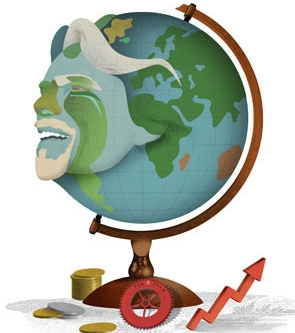
Newt Gingrich says, “Let me be clear: I am not a citizen of the world.” What planet does he inhabit, then? Here on totally interconnected Earth, we’ve all become global citizens. That’s especially clear, since the economic collapse last Fall.  The reality is that success and security depend on that awareness —  and on actions that reflect it, in public policy, business and in individual behavior – especially since the economic meltdown.

It’s frightening that the GOP finds that so…well, frightening.

Share

Climate Change & Green Business, Psychological health in a post-globalized world , , , ,