 by Douglas LaBier February 25, 2019
Originally published on Psychology Today
No question, life in today’s world can feel overwhelming with responsibilities, stress, and problems to deal with. So much so, that you probably remind yourself to “stop and smell the roses,” sometimes. You might think you need that time-out…before plunging right back into the fray. Or, you might reflect more broadly on being more grateful for everything you have at this point in your life – despite all the problems and conflicts you’re dealing with. But what does feeling “grateful” truly mean? And does it matter, when you have to carry on with your life in the “real world?”
Well, I can tell you that the findings of some recent research mesh with people’s experiences during psychotherapy, and they reveal interesting answers to those questions. But they’re different from what you might think. In essence, gratitude is different from just pausing to appreciate or acknowledge what you have. Moreover, there’s a direct link between experiencing a deeper form of gratitude and increasing your physical and emotional well-being. That is, it increases the health of your entire being – psychologically, physically and spiritually. All are interwoven
First, let’s look at the experience of more complete gratitude that we easily ignore. It extends beyond just feeling appreciative about whatever’s going “right” in your life. It includes all that – everything you’ve acquired and felt secure about – whether your relationship, your financial situation, your material positions, your own and your loved ones’ health. Those make up the outer layer of gratitude. As enjoyable as they are to reflect on and embrace — especially if you’re fortunate to “have” them all — they’re all external “possessions” really. Ultimately ephemeral and transitory. Everything changes and dissolves with time. Nothing you now “have” will last, including your own life. Interestingly, a recent study from Baylor University and summarized in BioSpace, found that the more highly materialistic people are less happy are with their lives than those who are less focused on material wealth and possessions.
The Inner Core of Gratitude
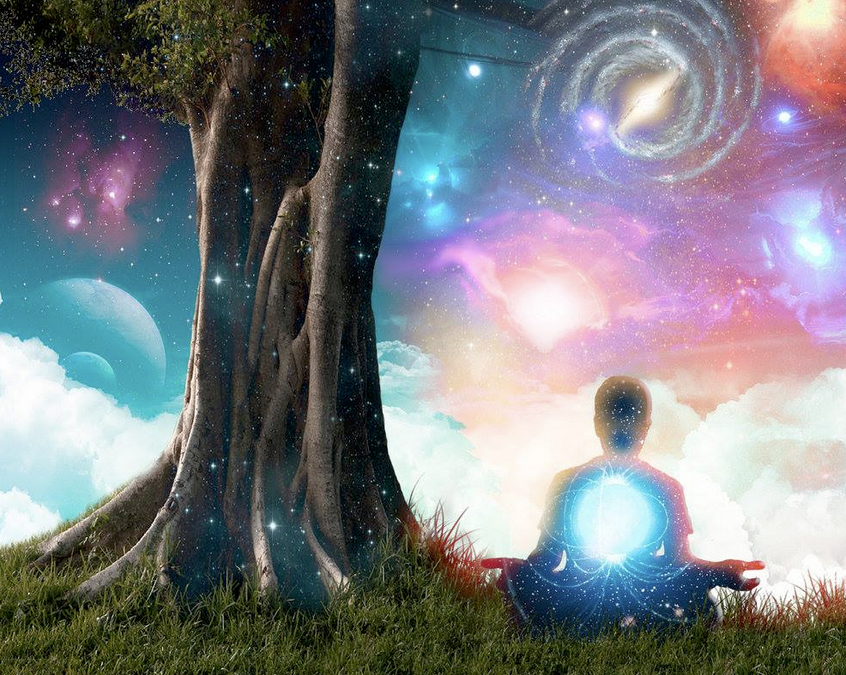
Of course, you value and appreciate that outer ring of gratitude. But there’s an inner core, a deeper experience of gratitude, and it underlies greater health and wellbeing in life. That inner core is inner life awareness of your continuous, intimate connection with all of life, in all its forms; awareness of just being alive, in this moment of time. It’s often aroused in unexpected moments. For example, an unanticipated moment of awakening to your being part of a continuous whole, from the beginning of time. It might happen walking in nature, or in the middle of the city, out of the blue. It unleashes a perspective that propels you beyond your own life situation, conflicts or disappointments, no matter how debilitating they feel in the moment. It also expands your vision beyond the pleasures you appreciate within that outer ring of gratitude. In fact, that deeper awakening stimulates energy, hope, and resilience that can help guide you through the debilitating situations or fears you might be dealing with at this moment of life.
Poets and writers often capture the essence of such a deeper, more core experience of gratitude. For example, this passage by the poet Mary Oliver: “Ten times a day something happens to me like this – some strengthening throb of amazement – some good sweet empathic ping and swell. This is the first, the wildest and the wisest thing I know: that the soul exists and is built entirely out of attentiveness.”
Or the writer Peter Matthiessen: “To ‘rest in the present’ is a state of magical simplicity…out of the emptiness can come a true insight into our natural harmony all creation…that we take this moment for what it is, undistracted, and not cloud it with needless worries of what might have been or fantasies of what might come to be.”
Gratitude, Your Health, and Your Wellbeing
Several studies link gratitude with increased health and well-being. For example, a summary of some of them from the University of California at Davis, finds “The practice of gratitude can lower blood pressure, improve immune function and facilitate more efficient sleep. Gratitude reduces lifetime risk for depression, anxiety and substance abuse disorders, and is a key resiliency factor in the prevention of suicide.”
Moreover, the UC Davis report shows that grateful people engage in more exercise, have better dietary behaviors, are less likely to smoke and abuse alcohol, and have higher rates of medication adherence – factors that translate into a healthier and happier life. Gratitude is also associated with higher levels of good cholesterol (HDL), lower levels of bad cholesterol (LDL), and lower systolic and diastolic blood pressure, both at rest and in the face of stress. It also has been linked with a state of harmony in the nervous system and heart rate that is equated with less stress and mental clarity.
There’s more: Gratitude also lowers levels of creatinine, an indicator of the kidney’s ability to filter waste from the bloodstream, and lowers levels of C-reactive protein, a marker of cardiac inflammation and heart disease. As lead author Robert A. Emmons pointed out, “Gratitude blocks toxic emotions, such as envy, resentment, regret and depression, which can destroy our happiness,”
Other studies show similar findings linking gratitude with health and well-being. For example, research from the University of Montana and published in the Review of Communication found that gratitude is associated with psychological well-being and increased positive states such as life satisfaction, vitality, hope, and optimism. It also contributes to decreased levels of depression, anxiety, envy, and job-related stress and burnout. Moreover, people who experience and express gratitude have reported fewer symptoms of physical illness, more exercise, and better quality of sleep
Such findings are consistent with what people experience from healing and growth during psychotherapy. It can enhance that broader experience of gratitude, both the inner core and outer ring. That occurs as people develop beyond healing and coping with their personal or career conflicts, and towards embracing those sudden moments of clarity and awareness – of being one small part of all life, itself.
Credit: Pexels
 By Douglas LaBier • January 26, 2021